Category Archives: media

I feel like going “after” the frequent misuse of the word “after” in news items

It’s been way, way too long since I shared a bit of Pet Peeve commiseration by an addict to getting things right – not sort of right, not “good enough.”

RIGHT:

This is one that, as they used to say, really “sticks in my craw.”

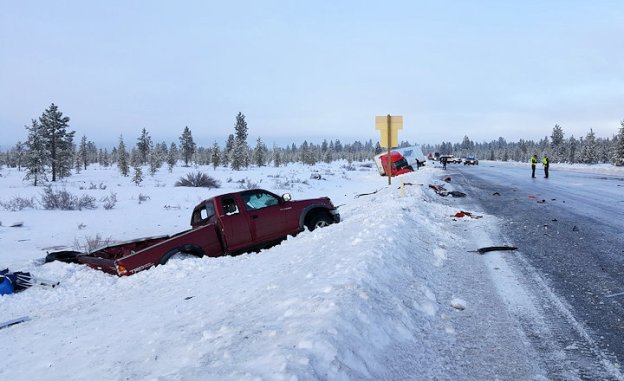
A crash headline: 3 people hurt after rollover crash.

NO. No, they weren’t. Not unless they were tragically struck by another vehicle after theirs rolled.

The article’s lead, however, has it right: “Three people were taken to the hospital after a rollover crash…”

RIGHT. After makes sense in THAT context.

But people aren’t hurt AFTER a crash. They’re hurt IN the crash.

The misuse of tense can leave me … tense. Irked. Perturbed.

But I get over it … after a while.

Now that my website has a simpler address … may I help you?

Greetings, and welcome to workingwithlocalmedia.com!

Well, I finally got the domain I bought years ago connected to this website. (I mean, finally got around to it;-) It’s still a WordPress.com-hosted site on an old theme, but hey … I’m no spring chicken, either, and I still work pretty well, too;-)

Now, what I’d like to do is help you and use the knowledge between my ears, from decades of fun, rewarding work, about how to do media relations (news releases, media advisories, event invitations) right – boosting the odds of successful coverage – I’d like to share that with all of you.

As I like to say: Free advice, worth every penny;-)

I can even offer some pretty helpful usability advice about websites, as a pure end user – not a designer, coder, etc. – again, just a small way for me to pay forward the lessons I’ve learned over the years.

I can do this in my spare time – evenings, weekends, etc. That way, it will be separate from my day job, overseeing the KTVZ website.

I’d like to offer a totally volunteer service, with a primary goal of helping my friends with these media-related tasks, while also making new friends – not a ‘consultancy’ to acquire clients. (This way, it’s a LOT simpler – no paperwork, less pressure!)

Public sector or private, nonprofit or for-profit – local or not, in fact – the advice and tips I can offer are pretty universal, as you can read when you look at my posts over the years.

Please use whatever works – and ask me anything, I’ll try to be of assistance.

Let’s talk in 2025!

When’s the last time you updated your media database?

We at KTVZ try to always point folks to the newsroom general email address for news releases etc. (stories@ktvz.com).

Because it just makes sense – people come and go, are off that day, etc., and your great info or release may end up sitting for days, weeks or months.

Personal relationships with reporters, editors, producers, news directors – great! But general news releases should always go to the general mailbox usually pointed to on the “About Us” or “Contact Us” pages.

But you know how databases are. Just got a release to the stories email address, that begins “Hi Lee,” — well, Lee is still with us, our great evening co-anchor, but he hasn’t been news director for quite a while.

In the subject line, too: “Lee, can we count on your end of year support?”

We still get many releases, especially from national organizations that have a salutation to long-gone staff members. It’s no huge deal, but it does make one think, for at least a second – “Don’t you prune/update your database at LEAST every year or 3?

Oh, now I see! At the bottom, in small type, it says: “To update your email address, change your name or address, or to stop receiving emails from xxx, please click here.”

So maybe, many moons ago, Lee did sign us up for something – or the sender just called or wrote or looked up who our news director was back then, and now expects the recipient to do the updating?

Uh, no. My guess is, 99% of recipients of such mass mailings just leave it be, some even getting a chuckle at the shout-out to long-gone ex-colleagues.

It becomes pretty obvious pretty quick when you don’t keep things up to date on the sender end. Better to safely leave out the personable salutations if you can’t keep those lists updated, for whatever reason.

As 2025 arrives, it’s time to step things up!

We’ve had some wonderful sunsets and sunrises here in Bend in 2024!

OK folks, sorry I haven’t been updating as much as I should and want to.

I am looking into making this more of a regular thing – collecting great tips from my day-to-day KTVZ.COM duties that will help anyone and everyone be more successful with their news release creation and distribution, as well as “learned end user” (not coder!) advice on info you post on your websites, events – whatever a person, organization or business is trying to accomplish to get that vital newsroom and public attention in the busy world of local media.

I simply want to help more people in more ways with the wit and “wisdom” (somehow that always feels pretentious!) I believe I’ve become known for over the years here in Bend, on the receiving end of 1,000s of news releases, media advisories and story pitches a month, from here and all over.

I can be a bit of your “AI” – with more fun than any chatbot will serve up (I think!;-)

For now, at least, this will simply be a no-fee advice and insight service – not a fee-based “consultancy” with all the time, energy, billing and hassle on the setup and paperwork end that could entail. A nights and weekends thing, to evolve past the crazy 24/7 newsman I’ve been since, oh, second grade (the mimeographed-purple “Room 210 Tooter”).

I just want to share what I’ve learned and know, and my advice, to our mutual benefit.

So please reach out! I should probably point to blerten@bendcable.com and not my work address, as I want to make sure to not conflict or interfere with my daytime DCD (digital content director) duties.

As always, I promise “free advice, worth every penny.” But seriously, I think we can help each other, and I’d love to try!

And a Happy, Healthy 2025 to us all!

What gets reported, what doesn’t – and some less-understood reasons why

Back to blogging. Sorry I’ve resisted. Waiting for perfect opportunities, format, etc. – dumb. Let’s just do it!

We learn a lot from Facebook commenters. Based on an AP story, a KGW story and an online news release, I/we posted a story about the search for a missing Mt. Hood snowboarder — and learned quickly from those commenters that as it turns out, he had been found several hours earlier.

Why the lag and posting of “old news?” Because only a non-profit SAR assistance agency had tweeted out the good news around 1 a.m.

(An aside: No matter how many nifty tools like Hootsuite or Social News Desk one uses to amalgamate all the many Facebook/Twitter feeds, and using every tech trick in the book, we all still have just two eyeballs, one brain and a finite number of hours in a day to track things. )

I’m told the sheriff’s office involved actually surprised our Portland media partners with a news release in the first place – because quite often, they don’t do so unless there’s a fatality. They, like we, work around the inevitable differences of opinion, policy and practice from one fire or police agency to the next, one spokesman/sergeant on duty to the next, etc. etc.

So when it comes to crimes, fires, crashes or noteworthy incidents, one of the many lesser-known reasons one event gets coverage and another of seemingly equal value doesn’t has nothing to do with the media’s editorial judgments, but of the judgments of others, for a variety of reasons.

For example, some fire departments include loss estimates, others don’t – and beyond the foibles of individuals and their different decisions on what to include or not, it’s also sometimes agency policies that differ from one to another. And even if we ask, well, again, the policies can dictate “unequal” treatment of roughly equal events, in terms of news judgment.

Then there’s the variables such as fire agencies’ inability to report on patient conditions, due to federal patient privacy laws. Police are under fewer restrictions, but still some.

Media policies also differ, and judgment calls abound – why, for example, name crime victims if they are in the hospital but not if they are not? Why (or why not) name others involved in crashes if they are not charged? I often have such debates with our relatively new news director and others. We can also put more info in online than on-air.

Then there’s another variable, probably quite familiar to many but not necessarily something you think about when reading or watching the news. The amount of other news going on that day, of equal or greater importance.

It probably happens in your job, too: Some items get more (or any!) care and attention some days than others, depending on the backlog of work to do and the prioritizing one must constantly rethink, in triage fashion. So it is with the news. It’s not an intentional slight on anyone’s cause, tale of woe, etc. It just … is.

So the next time you wonder, for example, why serious-injury Accident A got a write-up and seemingly similar Accident B didn’t, please keep in mind, it’s not necessarily an editor or reporter’s whim or biases, what area of town/region they like/hate, etc. etc. There are lots of other factors at play – some more or less obvious than others.

I sift through 100s of news releases in a day, and set aside a few worthy but not-critical ones I hope to post later on our Website. And the bar rises or lowers based on how much other, “real news” is going on. (And how well they cut/paste cleanly, another factor;-)

But I hate to go to bed with any interesting (to me), worthy-enough releases sitting in my inbox, marked unread until I get back to them. I also keep my home email inbox clean, and … I know many don’t care to leave things unread for hours, days, weeks, etc.

It’s why I put up with horrible battery life on my smartphone, because I keep the email-check settings set to … well, basically, now. As a competitive guy, a major news release or tip a minute or two earlier can make a big difference in who is first to tell you important things. And I always want that to be us.

 

Ten (or so) tips for better government-media communication

I’ve been given an opportunity to speak on a media panel Monday morning at the Association of Oregon Counties meeting in Bend. Since lists are so popular online: “Ten Ways to Restart Your Love Life,” or “Five things THEY don’t want you to know about xxx” – I figured it’s a good way to share some of my never patented “free advice, worth every penny you pay for it”;-) So here goes – and much of it, as always, isn’t limited to the public-sector audience on hand for this event. (And besides, this beats printing handouts! Easily updatable too;-)

SPEAK ENGLISH: I can’t stress this enough! If it takes four pages of a news release to explain how something works, it might not be worth trying. Don’t leave out the basics! Translate for us and the public. Oh, and if you’ve hit the third or fourth line for a first paragraph, stop and reconsider.

THERE IS NO PERFECT-LENGTH NEWS RELEASE: Breaking news? Fire off a  media advisory tip on where to be when and who to talk to. A complicated tax issue? Maybe serve up two full pages. But then, stop. Offer the name and title of a person WHO IS AVAILABLE TO TALK TO. Don’t frustrate reporters or the public with an inability to get clarification/answers. Don’t put out a release on taxes the week the assessor is out of town or too busy!

BASIC GRAMMAR MATTERS: Spare harried editors and reporters from having to fix simple things. But you communicate directly by social media now – so it’s not just about us! Please put periods and commas inside quote marks. Don’t capitalize titles, except immediately before names. And consider buying a subscription to the AP Stylebook, and follow it when your own rules don’t cover something. One person may decide your grand information’s fate, so make it easy on them!

“SAID” IS A VERY GOOD WORD: No one usually ‘converses,’ ‘states’ or other verb-option verbiage. “Said” is never, ever over-used! Speaking of simple – if you want to get a reporter or editor’s attention, don’t put “press release” in the subject line! Say something! Maybe 5-6 simple, attention grabbing words, like “Deschutes County to cut property taxes 30 percent.” I’d open that!

WE KNOW WHAT YEAR IT IS – TELL US WHICH DAY OF WEEK YOUR EVENT IS: Except in the last or first month or so of a year, the day of the week for a meeting, especially a public hearing, is FAR more important for folks to know than the year, which we can usually safely presume is the one we’re in. Don’t waste space – and please don’t make us get our calendar out.

YOU LIVE BY ACRONYMS – THE PUBLIC DOESN’T: There’s absolutely no reason to show the acronym in parentheses after every funky plan, group or agency. If the geeks use the term in a quote, write around it.

FIND WAYS TO UN-CONFUSE PEOPLE: We have a wildfire with two names. Back and forth they’ve gone. Why? I asked and was told. But it’s not just reporters who want to know. Find a way to tell people or they will guess. Often wrong.

FIND WAYS TO WORK WITH SOCIAL MEDIA: Not against it! Sure, it’s a new jungle, full of vile people saying awful things in front of your back, not behind it. But if you decide not  to play in that jungle, that it’s just too risky — well, they’ll be talking, with or without your involvement. Your citizens are there, and they expect answers and the most transparency allowed. Arguments yes, they will happen, but respect, too, for being willing to get involved and share the whys behind the whats.

DOES YOUR STAFF CHANGE? WELL, SO DO OURS: People come and go in our business all the time, or have time off – just like yours! So find the best newsroom-wide (and position-based) addresses for a news release, not just reporters. And for heaven’s sake, don’t have a mailing say “Hello your name here” in some database that hasn’t been updated for years.

PERSONAL RELATIONSHIPS WITH REPORTERS ARE GOOD – TO A POINT: If you build up a great relationship with a reporter – at newsrooms big enough for beats, that is – sure as shootin’ that guy or gal is likely to leave, and you start all over. Better to have a sit-down with the whole newsroom once in a while to put faces with names. Please, NOT just the newspaper editorial boards. That facial recognition and investment is worth your time.

But wait, there’s more! Here’s a bonus No. 11 and 12!

DON’T TAKE TOO LONG! I know many govt. agencies require layers of approval before putting out any info to the public. Please seriously consider the tradeoffs in not getting something out faster. Sure, you might have to correct or update later, but … you WILL curb the social media rumor mill.

TELL SPECIAL GOOD NEWS: I often explain, or perhaps defend – it’s a fine line – government in what I call today’s toxic “Blame Society.” But do your part by letting people know – directly via social media if we’re not listening – the many good things you’re doing, from the trash collector who just marked 30 years of very early shifts to a retiring official’s broad impact behind the scenes. It won’t crowd out the bad news, but it can present a more well-rounded picture and reduce the need for PR puffery the next time you have to share bad news with the public, like a fee hike or detours.